- ERE Weekly
- Posts
- Amazon and the Future of Work
Amazon and the Future of Work
The company's fulfillment centers are a microcosm of today’s changing labor market

David Manaster
December 10, 2025
AI, the hangover from COVID-era overhiring, work-from-home, return-to-office mandates, and robotics are restructuring what labor does and how we do it. Jobs that felt stable a few years ago are rapidly changing or vanishing completely.
Amazon has been at the center of nearly every major labor market shift of the last three decades, even as it has gone from scrappy startup to the second-largest private employer in the world.
Last week, I visited Amazon’s fulfillment center known as LGA9 in Edison, New Jersey.
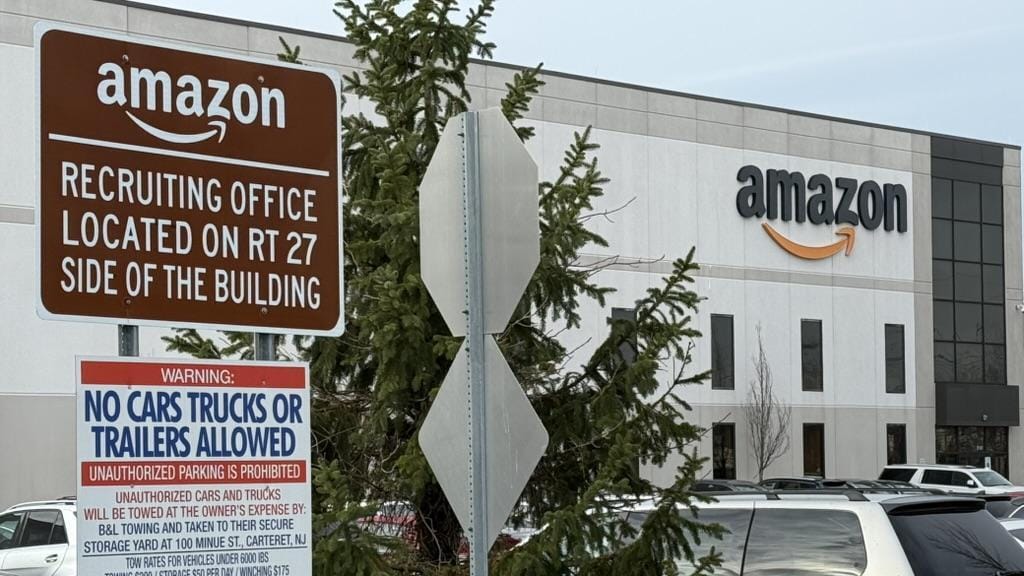
I was not allowed to take photos inside the facility, which is a shame, because it is impressive. Barcodes and QR codes are everywhere. They are on individual items, on the boxes those items are packed into, and even on the floor, guiding robots along prescribed paths as they move containers around the warehouse.
We are heading into the peak holiday season in the United States, so the place was buzzing. Hundreds of employees were working on the warehouse floor. Conveyor belts hummed overhead while robots glided across the floor, bringing carts full of knickknacks and doodads to human workers.
The system is incredibly efficient. Here is what work looks like at one station - the “picker” role.
A robot brings a cart to the worker. On a screen, the worker sees an image of the item, along with a cue showing which compartment of the cart it sits in. A light highlights that compartment. The worker reaches in, grabs the item, and another green light shows which tote to place it in. Then they push the button above the tote, and it is whisked away on a conveyor belt to the next step in the process.
It all takes seconds.
The job already feels robotic, even though a human is doing it. What goes into the box and where it goes next are determined by an algorithm. The worker just follows the screen’s directions and has to be accurate and fast with their hands.
If you were looking for an example of a job that is ripe for automation, this is it. The workflow is already broken down into small, tightly scripted steps. The system already “knows” what needs to happen. Replacing the person at the cart with a robotic arm feels less like science fiction and more like a straightforward engineering problem.
LGA9 is not Amazon’s most cutting-edge warehouse, having been in operation since 2017. The newest buildings, like Amazon’s Shreveport, Louisiana facility, are the true templates for the future, and even more of the work is being done by robots.
The picker-like jobs are among those that face extinction in the newer facilities. If a job can be broken into a series of predictable actions prompted by a screen and a blinking light, it is exactly the kind of work that machines are getting better at every year.
There are areas of job growth here too. Things break. Robots jam. Sensors fail. The machines cannot fix themselves. They need people with the training to diagnose what went wrong, improvise solutions, and keep the system running. Those “thinking jobs” are fewer in number, but they are going to continue to grow in importance.
There are far more automateable jobs than there are “safe” jobs in the fulfillment center. The New York Times reports that Amazon plans to have around 40 facilities built on the new template by the end of 2027, and has already begun overhauling some existing locations to match that model. Amazon’s automation team expects that these changes will allow the company to avoid hiring about 160,000 people in the United States by 2027.
Recently, there have been reports that Amazon is considering cutting ties with the U.S. Postal Service and building out its own shipping network. It is easy to imagine what that might look like: a logistics system that applies Amazon’s playbook to the last mile from an Amazon warehouse to your front door, more efficient and with less human jobs throughout.
Amazon is a leader in automation, but similar stories are playing out in factories and warehouses around the world. White-collar work, once safe from all of this, is now facing similar pressures from AI.
If a job is so repeatable that it can be automated, it will be.
For talent acquisition leaders, the real question is: how many of the roles that we hire for are being reshaped by these dynamics, including the jobs on our own recruiting teams?
— David
P.S. If you found this newsletter valuable, chances are your colleagues will too. Feel free to forward it along—and if it landed in your inbox by way of a friend, you can subscribe here to get the next one directly.
Sponsored Content

Most TA leaders face low applicant volume, but the real question is where your metrics actually stand compared to industry benchmarks. This free tool shows how your applicant-to-hire rate, candidate-to-hire rate, and offer acceptance stack up across industries. Plus, you'll get a bonus report on the 5 key metrics for hiring efficiency.
Featured Story
Beyond Amazon: The Coming Recalibration of Work, Education, Skills, and Careers
If Amazon’s robotics push has you wondering what’s next, you’re not alone. Ron Thomas digs into the big picture, and what these moves mean for education, governments, and the relationship that we all have with work. (ERE)
More Recruiting Insights
SHRM has been hit with an $11.5 million verdict in a racial discrimination lawsuit. The drama at SHRM never seems to end. In this week’s edition, Rehab Mohamed, an instructional designer employed by SHRM, was awarded $11.5 million in damages for racial discrimination and retaliation. Two other discrimination cases were filed in recent years against the organization - one was was settled in 2018, and the second is still pending. (Business Insider)
What SHRM’s Own Tax Filings Reveal About Their internal HR practices. Karen Ehrenberg dug into SHRMs public filings and found that from 2018 to 2025 revenue increased by 60% while employee headcount grew by only 3%. CEO Johnny Taylor’s compensation skyrocketed by 420%, while signs point to increased turnover at the non-profit. Great work here. (Karen Ehrenberg)
US planned job cuts fall 53% in November, Challenger says. This headline is misleading, as they were still 24% more layoffs than same period a year ago. Year to date, announced layoffs total about 1.17 million, up 54% from 2024, while hiring plans have dropped to the lowest level since 2010. (Reuters)
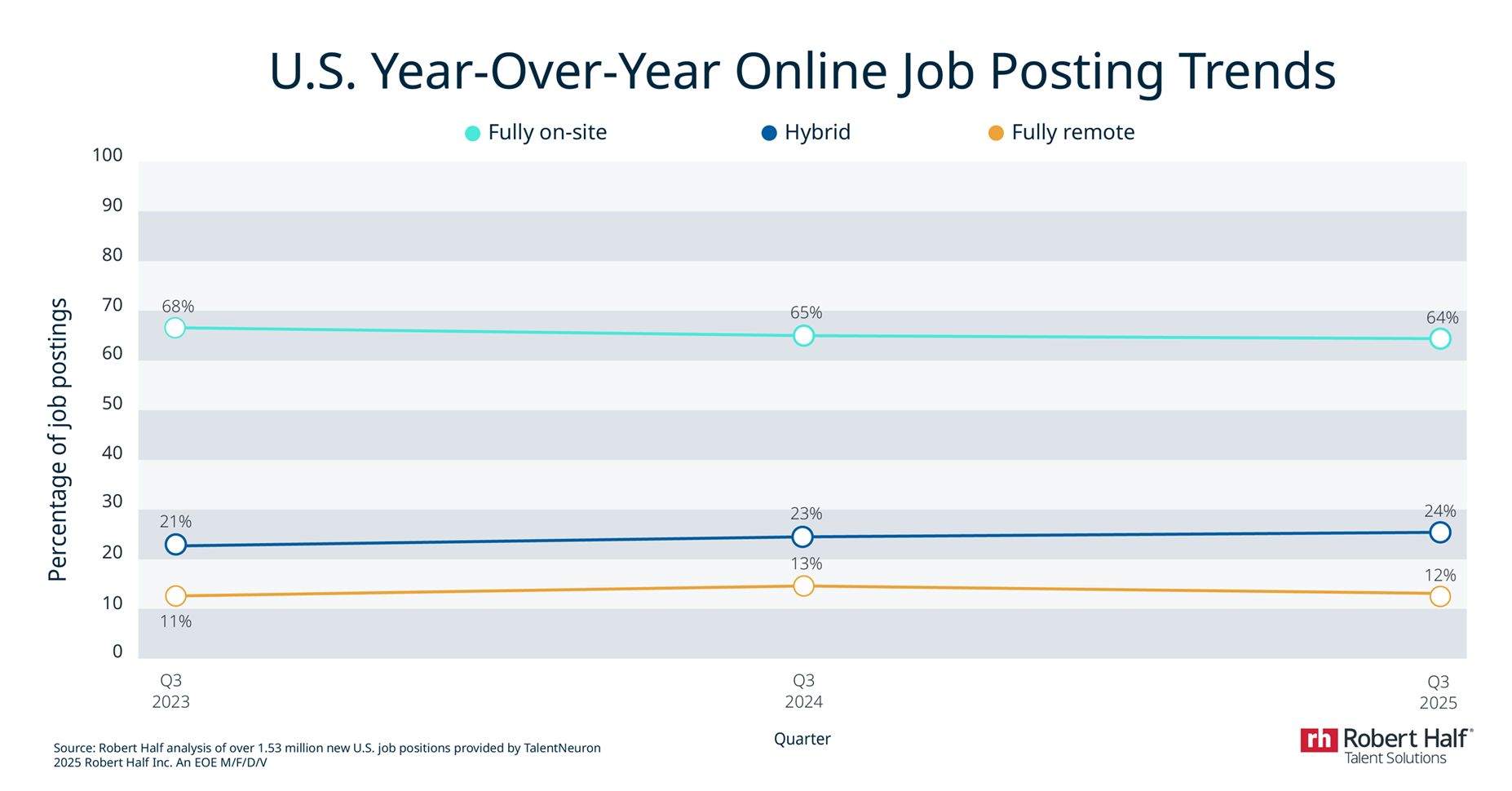
Remote Work Statistics and Trends for 2025. Hybrid work is here to stay, growing as a share of all job postings analyzed by Robert Half, while the share of fully on-site job postings declined. (Robert Half)
Webinars
The Great Tech Interview Playbook
December 11, 2025 | 2:00 PM EDT | 1 Hour
Tech interviews are evolving fast — and for good reason. The best teams know that outdated white-boarding or vague algorithm questions often fail to reflect the way engineers actually work. Today, great interviews are collaborative, contextual, and designed to reveal not just what candidates know, but how they solve problems in the real world.
Learn how to design interviews that feel less like a trap and more like a conversation — and how to create a hiring experience that reflects the work and culture your team is proud of. (ERE)